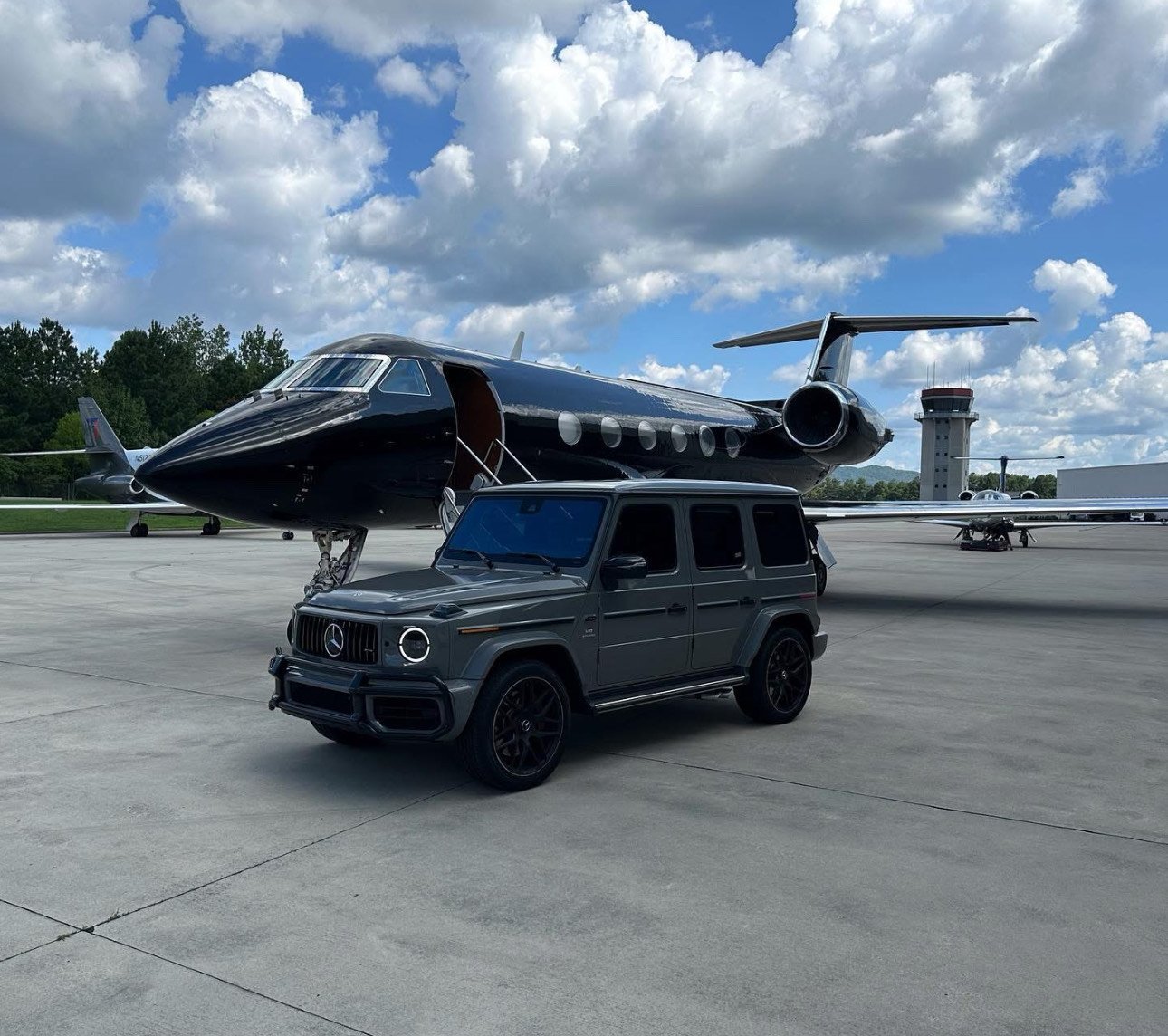
Now applying a two-component 2K aviation ceramic matrix — the Boeing D6-17487 compliant coating engineered for corporate jets, Part 135 charter fleets, and high-performance turboprops.
Spec Sheet
$5M Hangar Keepers Liability
100% Silicone-Free Shop
OSHA-10 & Static Port Certified
24/7 Hangar Dispatch: KPDK • KFTY • KRYY • KLZU • KATL
The Engineering
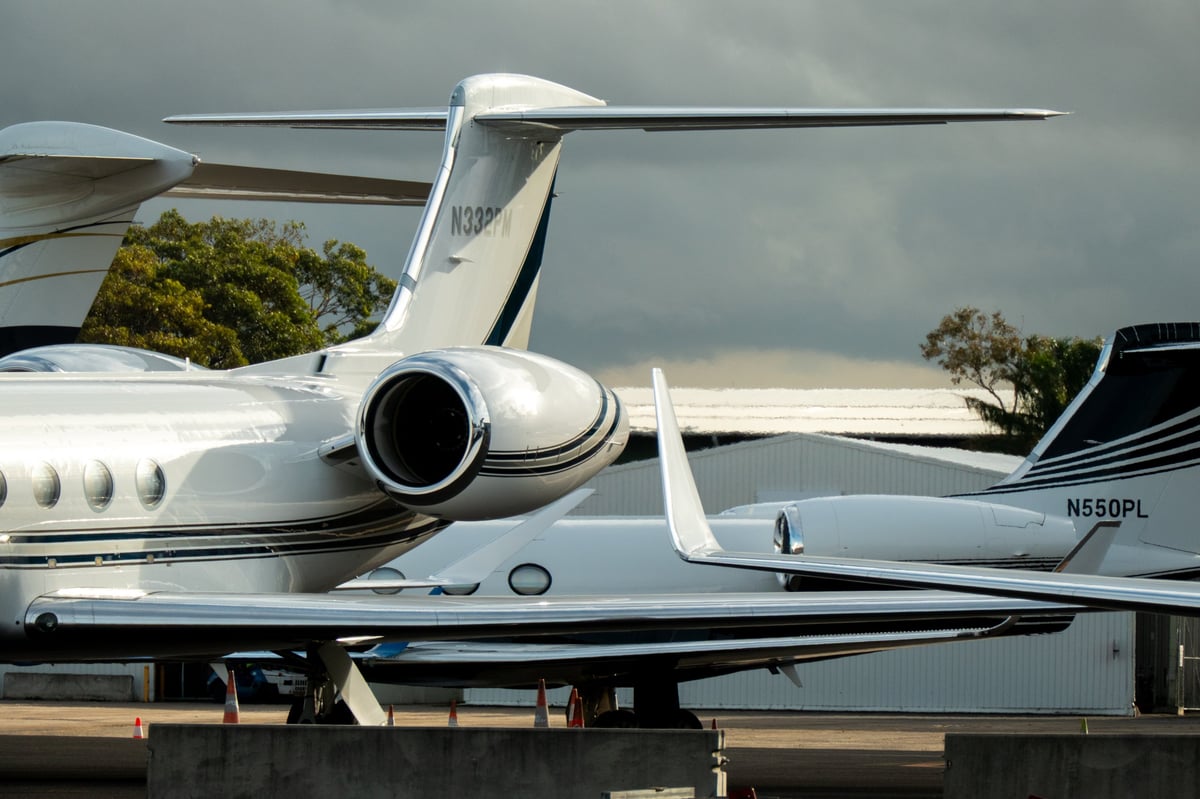
Corporate airframes operating out of Metro Atlanta face punishing environmental and operational stressors. Within minutes of departure from DeKalb-Peachtree (KPDK) or Fulton County – Brown Field (KFTY), an aircraft transitions from high-humidity tarmac heat to -65°F at Flight Level 450. Standard waxes and consumer-grade coatings delaminate, yellow, or micro-crack under rapid thermal cycling and skin flexing.
AllSouth Aircraft Detailing applies a professional two-component nano-ceramic coating specifically engineered and tested to Boeing Specification D6-17487 and Airbus/AMS surface standards. The 2K matrix forms an ultra-thin, chemically inert glass layer over polyurethane and epoxy aviation paint systems—shielding your asset without adding measurable weight or altering aerodynamic tolerances.
The "2K" refers to its two-part curing chemistry: the ceramic matrix cross-links to full hardness rather than flashing off like a single-component consumer coating. That is why it holds up through repeated wash cycles and de-icing fluid exposure where an off-the-shelf product would already be gone.
Coatings are applied to a measured dry-film thickness in the sub-2 micron range—below the threshold where surface finish could influence boundary-layer behavior, and far below any weight-and-balance significance.
Flight-Level Performance
Polyurethane & epoxy aviation paint systems
-65°
FL450 Thermal Swing
<2µm
Applied Film Thickness
Parasitic Drag & Fuel Burn Reduction
By filling microscopic pores in the polyurethane topcoat, our covalent ceramic layer reduces skin friction and boundary-layer drag, keeping leading edges cleaner and improving laminar airflow.
Skydrol, Jet-A & Exhaust Carbon Defense
Forms a sacrificial hydrophobic barrier along thrust reverser cascades, engine nacelles, and belly skins. Corrosive APU soot, turbine exhaust carbon, and hydraulic fluid (Skydrol/HyJet) wipe away during routine dry washes without staining the paint.
High-Altitude UV & Ozone Shielding
Blocks intense UV-A and UV-B radiation above 30,000 feet, preventing oxidation, chalking, and costly premature repaint cycles ($150,000–$500,000+ in MRO paint downtime).
Zero Hydrogen Embrittlement or Acrylic Crazing
All prep solvents and coating chemistries strictly conform to ASTM F519 (Hydrogen Embrittlement) and ASTM F484 (Stressed Acrylic Crazing) safety thresholds.
The Protocol
Before a ceramic coating is ever unsealed, the airframe's substrate must be surgically decontaminated and leveled. We operate a strict 100% silicone-free protocol so your aircraft never suffers fisheyes or adhesion failures during future MRO paint touch-ups.
Pitot-Static, Avionics & Composite Masking
Every pitot tube, static port, AOA vane, stall warning tab, De-Ice boot, and acrylic window is masked and tagged per the Aircraft Maintenance Manual (AMM) prior to chemical or mechanical contact.
Turbine Soot & Chemical Decontamination
Belly panels, gear doors, and tailcones are stripped of baked-on exhaust carbon, TKS fluid residue, and old polymer waxes using Boeing-approved solvent cleaners.
Forced-Rotation Orbital Leveling
Nuvite NuPol NuPower II Griot's G9 Mirka Rotary
Using precision forced-rotation random orbital polishers, we level micro-marring, swirl marks, and surface oxidation—without generating the excessive friction heat of legacy rotary buffers that burn thin rivet lines.
Isopropyl Panel Wipe & Covalent Ceramic Bonding
The leveled polyurethane paint is neutralized and hand-coated in controlled hangar sections, ensuring uniform cross-linking across fuselage skins, winglets, and empennage surfaces.
Zero Silicone Contamination
Silicone residue is the leading cause of fisheyes in aviation repaint. Our shop, pads, microfibers, and chemistry are segregated and verified silicone-free—so your next MRO touch-up bonds cleanly.
For DOMs & Dispatch
We structure our manpower around your flight schedule so Maintenance Control knows the exact hour the aircraft returns to service.
Corporate Turboprop & Light Jet
Example Airframes
King Air 350i, Pilatus PC-12, Phenom 300, Citation CJ4
Midsize & Super-Midsize Jet
Example Airframes
Challenger 350/3500, Citation Latitude/Longitude, Praetor 600, Gulfstream G280
Heavy Iron & Ultra-Long-Range
Example Airframes
Gulfstream G550/G650/G700, Global 6000/7500, Falcon 7X/8X
Cure note: aircraft are released tack-free to the hangar floor and are flight-safe after the overnight window. Full chemical cross-linking continues for 7 days—we provide a written post-care card for your line crew.
Technical FAQ
Straight answers for Directors of Maintenance, Chief Pilots, and flight department leadership.
Yes. The ceramic matrix we apply is a two-component aviation-grade ceramic coating, which is Boeing spec approved and tested to Boeing D6-17487, Douglas CSD#1, and AMS 1650 protocols for paint softening (ASTM F502) and corrosion prevention. Every prep compound we use meets or exceeds the same standards. Full Safety Data Sheets (SDS) for each product are provided to your DOM prior to crew dispatch.
Yes. Because our preparation utilizes waterless dry-wash extraction and low-VOC forced-rotation correction, zero water runoff occurs on the hangar floor. We coordinate directly with Signature Aviation, Atlantic Aviation, Hill Aircraft, and Hawthorne Global line operations.
No. The covalent ceramic matrix is applied in the sub-2 micron dry-film range—orders of magnitude below any weight-and-balance threshold and well under the surface-roughness limits that would alter boundary-layer behavior. Leading edges, control surfaces, and static ports are masked and verified prior to release.
Expect multi-year service life under normal corporate flight-hour profiles. Maintenance is simple: routine pH-neutral dry washes, no aggressive degreasers over the coated skins, and an annual decontamination inspection. We document the application date, product lot, and film build in your aircraft records.
Yes. We schedule in discrete hangar blocks that fit between inspections or phase checks, and we offer 24/7 dispatch across KPDK, KFTY, KRYY, KLZU, and KATL. If a charter pops, we can stage the correction in sections and hold the ceramic application until the airframe is available.
Coverage
Self-contained mobile units and coordinated FBO hangar access at the Southeast's busiest corporate aviation hubs.
KPDK
DeKalb-Peachtree
KFTY
Fulton County Exec.
KRYY
Cobb County Intl.
KLZU
Gwinnett County
KATL
Hartsfield-Jackson
FBO Coordination
Signature Aviation
Atlantic Aviation
Hill Aircraft
Hawthorne Global
Send us your tail number, airframe type, and next open hangar window. We'll return a written scope, cure schedule, and a firm release time—plus the COI and SDS packet for your DOM.
COI & SDS On Request
100% Silicone-Free
OSHA-10 Certified
24/7 Dispatch